NSFAS Funding Guide: Eligibility, Benefits and Payments 2026
Paying for university or college can be stressful, especially when tuition fees, accommodation, books, and daily expenses start adding up. For many South African students, the National Student Financial Aid Scheme (NSFAS) provides a way to continue their education without carrying the full financial burden.
NSFAS funding helps eligible students cover important study costs, including tuition fees, accommodation, learning materials, transport, and living expenses. However, many students are unsure about who qualifies, what benefits are included, how payments work, and how to apply successfully.
This complete NSFAS Funding Guide explains everything you need to know in simple terms, from eligibility requirements to allowances and payment information.
What Is NSFAS?
NSFAS (National Student Financial Aid Scheme) is a South African government financial aid programme that helps students from financially disadvantaged backgrounds access higher education. The scheme provides NSFAS Funding Guide support to eligible students studying at:
Instead of students paying all education costs themselves, NSFAS covers approved expenses based on the student’s eligibility and institution requirements. The main goal of NSFAS is to make education more accessible for students who cannot afford higher education costs.
Quick Answer: Who Qualifies for NSFAS Funding?
Students may qualify for NSFAS Funding Guide if they:
Are South African citizens
Are enrolled or planning to enrol at an approved public university or TVET college
Come from a household that meets the income requirements
Meet academic and registration requirements
Do not exceed the maximum funding limit
Students must also submit accurate documents during the application process.
NSFAS Eligibility Requirements
Before applying, students should check whether they meet the basic NSFAS requirements.
Citizenship Requirement
Applicants must be:
1.South African citizens, or
2.Eligible permanent residents under NSFAS rules
3.Students must provide valid identification documents during application.
Household Income Requirements
NSFAS mainly supports students who cannot afford higher education costs. Generally, applicants qualify if their household income falls within the NSFAS financial threshold. The income limit may vary depending on student circumstances, including:
1.Dependent students
2.Independent students
3.Students with disabilities
Always check the latest NSFAS requirements before applying because income limits can change.
Academic Requirements
Students must meet academic conditions set by NSFAS and their institution. This usually includes:
1.Being accepted at an approved institution
2.Meeting progression requirements
3.Continuing to pass required modules
NSFAS Funding Guide is not automatically guaranteed every year. Students must continue meeting academic rules.
What Does NSFAS Cover?
One of the biggest benefits of NSFAS is that it covers more than just tuition fees.
Eligible students may receive support for:
NSFAS covers approved tuition fees charged by public institutions.
This helps students focus on their studies instead of worrying about large education bills.
Students who qualify may receive funding for approved accommodation.This can include:
- University residences
- Accredited private accommodation
Students should always confirm accommodation requirements with their institution.
- Textbooks
- Academic materials
- Other approved learning tools
Students who travel daily may receive transport support depending on their eligibility.
NSFAS provides living support to help students manage everyday expenses while studying.
Who Can Apply for NSFAS Funding?
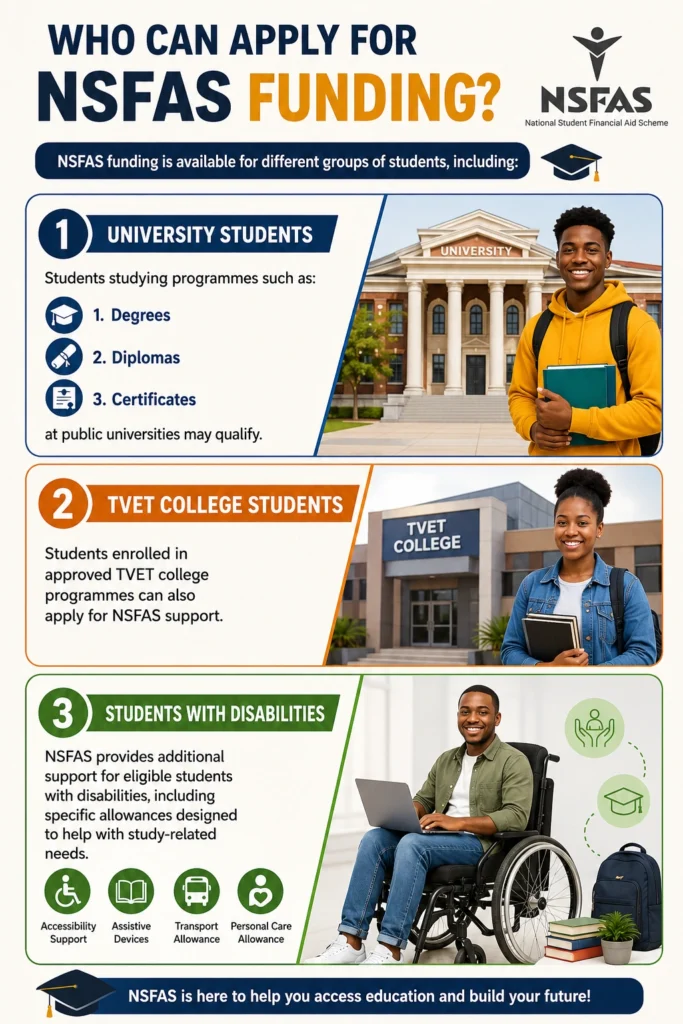
NSFAS funding is available for different groups of students, including:
University Students
Students studying programmes such as:
1.Degrees
2.Diplomas
3.Certificates
at public universities may qualify.
TVET College Students
Students enrolled in approved TVET college programmes can also apply for NSFAS support.
Students with Disabilities
NSFAS provides additional support for eligible students with disabilities, including specific allowances designed to help with study-related needs.
NSFAS Allowances Explained
Many students confuse NSFAS Funding Guide with only tuition coverage. However, allowances are an important part of the programme.
Common NSFAS allowances include:
| Allowance | Purpose |
| Accommodation Allowance | Helps cover approved housing costs |
| Transport Allowance | Supports commuting students |
| Living Allowance | Helps with daily expenses |
| Learning Material Allowance | Supports study resources |
The exact amount students receive depends on factors such as:
How to Apply for NSFAS Funding
Applying for NSFAS is done online through the official NSFAS application system.
Create an NSFAS Account
Students need to create an account using their personal information. Make sure details match official documents.
Complete the Application Form
Provide information about:
1.Personal details
2.Household information
3.Education details
4.Institution choices
Upload Required Documents
Common documents include:
1.South African ID document
2.Parent/guardian identification documents
3.Proof of income (if required)
4.Disability documentation (if applicable)
Submit the Application
Before submitting:
1.Check all information carefully
2.Confirm documents are uploaded correctly
3.Save application confirmation
4.Incomplete applications may face delays.
NSFAS Payment Process
Many students ask:
“How does NSFAS pay students?”
NSFAS payments are processed through approved payment systems and institutions. Payments may include:
Students should keep their banking information updated and regularly check NSFAS communication channels.
NSFAS Payment Dates
NSFAS payment dates can change each academic year. Students should check:
Payment delays can happen because of:
Missing documents
Registration problems
Verification issues
Incorrect information
Tips to Avoid NSFAS Application Problems
Many applications are delayed because of simple mistakes. Follow these tips:
Common NSFAS Application Status Meanings
Students often see different application messages.
Your application has been received.
You qualify for funding.
NSFAS is checking your information.
You meet funding requirements but final processing may continue.
Your application does not meet current requirements.
Common Reasons NSFAS Applications Get Rejected
Applications may be rejected because of:
If rejected, students should check whether an appeal option is available.
NSFAS Benefits for Students
NSFAS provides several advantages:
Students can focus more on studying instead of worrying about fees.
Students from disadvantaged backgrounds get opportunities they may not otherwise have.
Funding can help with tuition, accommodation, transport, and learning materials.
Frequently Asked Questions About NSFAS Funding Guide
Conclusion:
NSFAS plays an important role in helping thousands of South African students continue their education. Understanding the eligibility rules, benefits, application process, and payment system can make the funding journey much easier.
If you are planning to apply, prepare your documents early, provide accurate information, and regularly check your NSFAS status.With the right preparation, NSFAS Funding Guide can help remove financial barriers and allow students to focus on achieving their academic goals.