NSFAS Application Rejection 2026: Reasons and Appeal Guide
Facing a rejection from NSFAS National Student Financial Aid Scheme can feel discouraging, especially when your academic future depends on it. However, in most cases, rejection does not mean you are unqualified—it simply means your application did not pass verification at that stage.
Every year, thousands of students are initially rejected due to documentation errors, income mismatches, or system verification issues. The positive news is that most of these cases are fixable through a structured appeal process.
This guide breaks down everything: why rejection happens, how to verify it, how to appeal correctly, and what to do if things don’t go your way. Understand NSFAS Application Rejection 2026 reasons, appeal steps, required documents, deadlines, and what to do next to secure funding successfully.
Understanding NSFAS Application Rejection Status in Simple Terms
A NSFAS Application Rejection status means NSFAS was unable to approve your funding based on the information provided at the time of review.
It usually indicates one of the following:
Missing or incomplete application data
Financial eligibility concerns
Identity verification mismatch
Academic progression limitations
Duplicate or external funding detected
In simple terms, it is a data or eligibility mismatch—not a judgment on your potential.
Main Reasons NSFAS Applications Get Rejected in 2026
Even outdated SARS records can trigger rejection.
Even a small error like unreadable text can affect approval.
Even minor spelling differences can cause system rejection.
If exceeded without valid reasons, funding may stop.
Your application may be rejected automatically.
Applications submitted after closing dates are generally not considered.
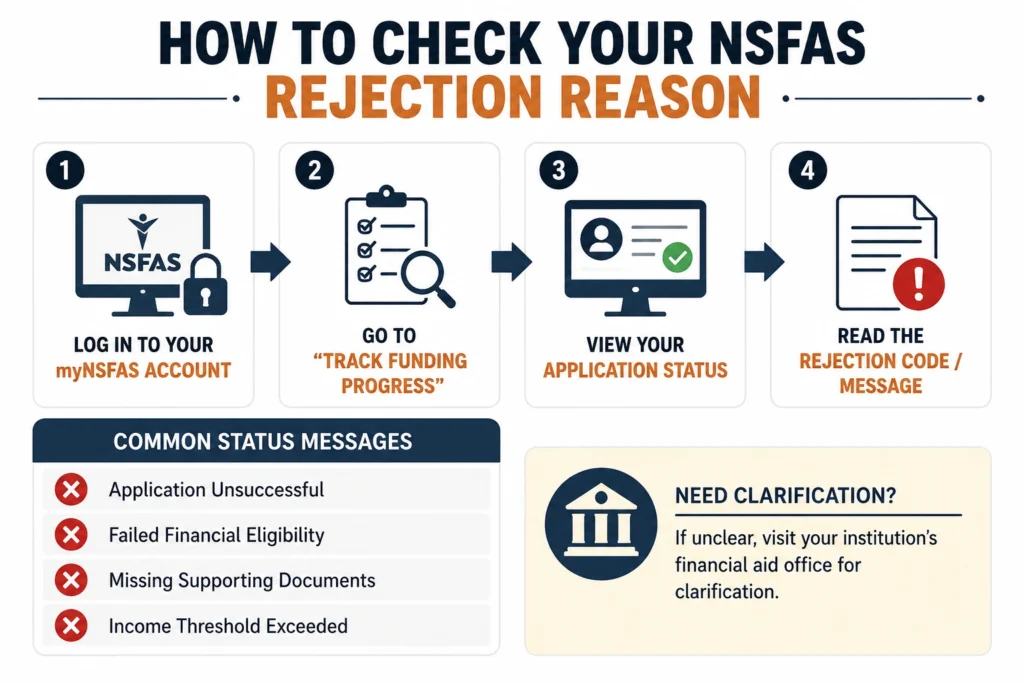
How to Check Your NSFAS Rejection Reason
To understand exactly why you were rejected:
Log in to your myNSFAS account
Go to “Track Funding Progress”
View your application status
Read the rejection code/message
Common status messages:
Application Unsuccessful
Failed Financial Eligibility
Missing Supporting Documents
Income Threshold Exceeded
If unclear, visit your institution’s financial aid office for clarification.
Immediate Steps After NSFAS Rejection
Once you see a NSFAS Application Rejection:
Do not assume the reason—confirm it in your portal.
Your entire appeal depends on this.
Only documents linked to your rejection reason matter.
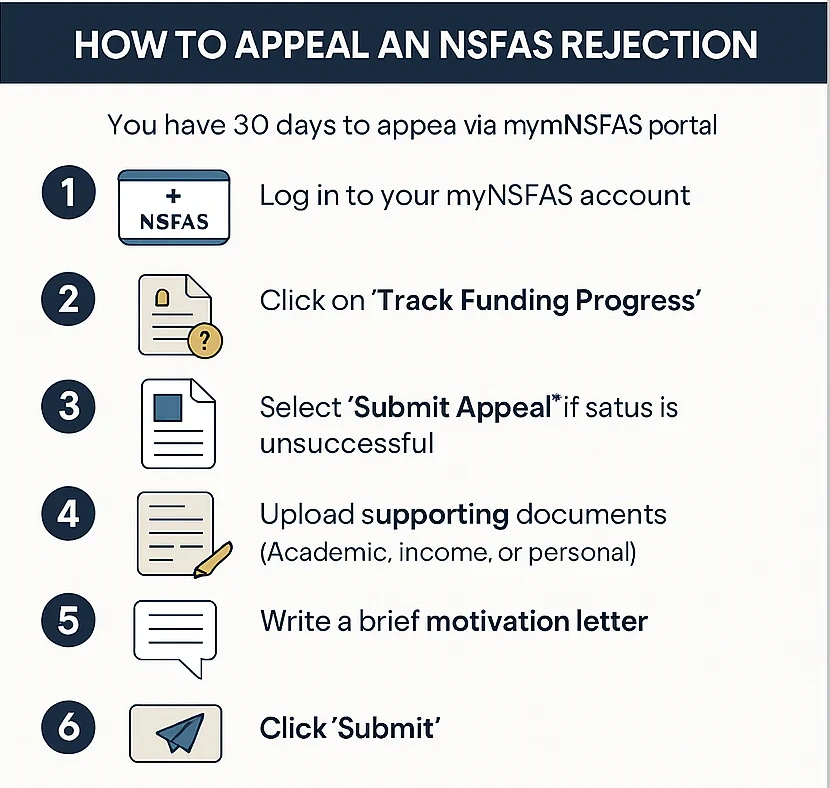
You usually have 30 days to submit an appeal.
NSFAS Appeal Process (Step-by-Step 2026 Guide)
If your application is rejected, you can request a review.
How to Submit an Appeal:
Log into myNSFAS portal
Click “Track Funding Progress”
Select “Submit Appeal”
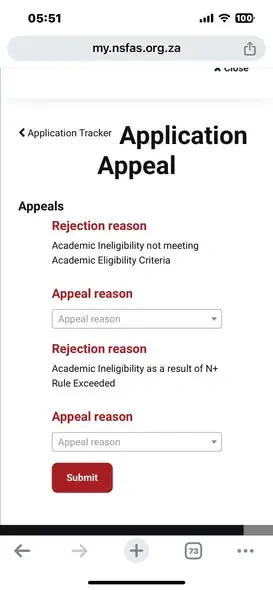
Choose rejection reason
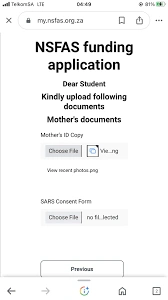
Upload supporting documents
Submit appeal
After submission, you will receive confirmation.
How to Write a Strong Appeal Motivation Letter
Your appeal letter is your explanation to NSFAS. It should be simple, factual, and honest.
What to Include:
Clear reason for appeal
Honest explanation of situation
Supporting evidence reference
Short statement of academic goals
Writing Style Tips:
Example Style:
“My application was rejected due to incorrect income information. Attached is updated proof showing my parent’s retrenchment. I kindly request reconsideration based on this change.”
Documents Commonly Required for Appeals
Depending on your case, you may need:
All documents must be:
NSFAS Appeal Timeline (What to Expect)
Appeals are not instant. Typical stages include:
Initial review: 3–7 working days
Full processing: 20–45 working days
Final outcome: up to 60 days in peak periods
Status updates may show:
NSFAS N+ Rule Explained Simply
NSFAS funding is limited to:
Course duration + additional allowance years
Example:
Exceeding this limit without valid reasons can lead to NSFAS Application Rejection.
What If Your NSFAS Appeal Is Rejected?
If your appeal is unsuccessful, you still have options:
Alternative Funding Paths:
University hardship funds
Private bursaries
NGO scholarships
Student loans
Part-time study options
Reapplication next year
Rejection does not close all academic opportunities.
How to Avoid NSFAS Application Rejection in Future Applications
Prevention is better than appeal. Follow these practices:
Small errors are the biggest cause of rejection.
Frequently Asked Questions About NSFAS Application Rejection
Conclusion: Rejection Is a Process, Not the End
A NSFAS Application Rejection is not a final decision about your future. It is usually a technical or verification issue that can be corrected. With the right documents, clear communication, and timely appeal submission, many students successfully reverse their rejection.
Even if an appeal fails, alternative funding paths remain available. The key is to stay proactive, organized, and informed. Your education journey continues beyond rejection—it just takes a different route.