How to Check NSFAS Status, Login and Track Application 2026
If you’ve applied for the National Student Financial Aid Scheme (NSFAS) 2026 funding, keeping track of your application progress is an important part of securing financial assistance for your studies. Through the official NSFAS portal, students can access their accounts to monitor application updates, confirm funding decisions, review submitted information, and manage their personal details. Application statuses may indicate whether your funding has been approved, is still under review, or requires additional documentation.
For many students, regular status checks provide clarity and help them prepare for registration, tuition expenses, accommodation arrangements, and other educational costs. Staying informed throughout the process can reduce uncertainty, prevent missed deadlines, and ensure that any issues affecting your application are resolved as quickly as possible, allowing you to focus on your academic goals with greater confidence. Check NSFAS status online, access myNSFAS login, online application tracking,view app status updates, funding progress, appeals, payments & results easily today.
What Is NSFAS and Why Is It Important?
The National Student Financial Aid Scheme is a government program that supports South African students who cannot afford higher education by covering tuition, accommodation, study materials, transport, and living expenses. Checking your NSFAS status through the official myNSFAS portal helps you track your application, respond to document requests, and stay updated on funding progress. Staying informed ensures your financial aid remains active, avoids delays, and allows you to focus on your studies with confidence.
Step-by-Step Guide to Checking Your NSFAS Status Using Application in 2026
Staying updated on your National Student Financial Aid Scheme funding application is essential for planning your studies. The official myNSFAS Student Portal makes this process simple and accessible. Here’s how you can check your status effectively:
Visit the Official Portal: Open the myNSFAS login page on your computer or mobile device.
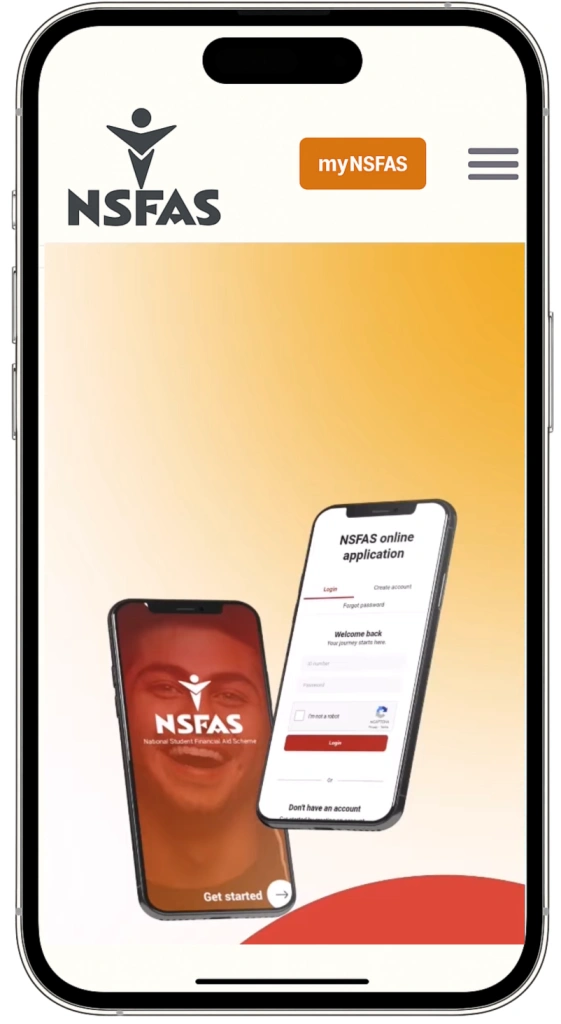
Set Up Your Account or Log In: New users enter their South African ID number, create a password, complete CAPTCHA verification, and confirm their email. Returning students can log in directly with their credentials.
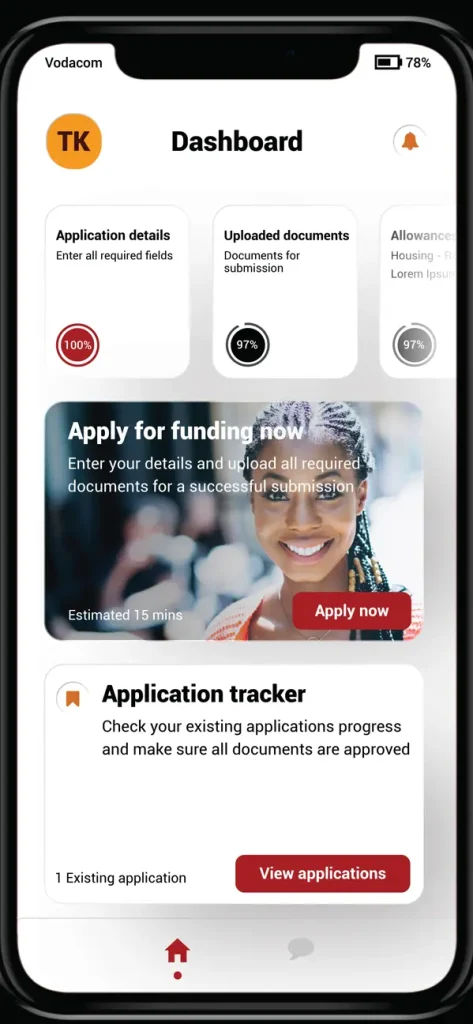
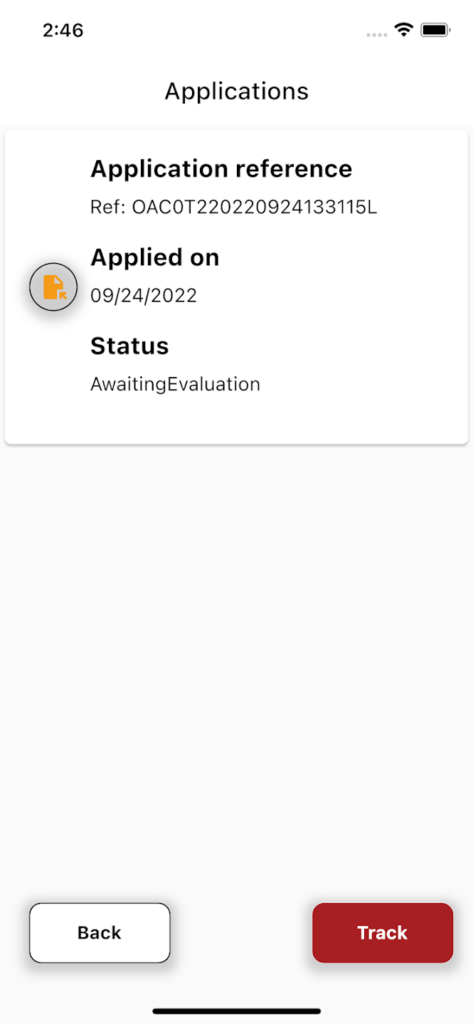
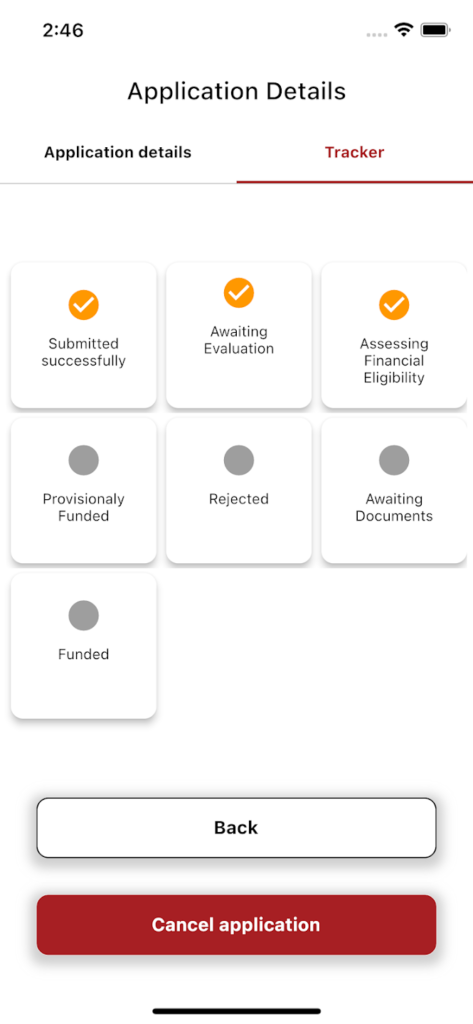
View Application Progress: The dashboard displays each stage of your application, from submission to funding approval.
Check Funding Status: See if your application is approved, pending, or requires additional steps.
Submit Pending Documents: If your status indicates “Awaiting Documents” or “Verification,” follow the instructions to provide the necessary information.
Alternative Status Checks: You can also track your application using your ID number, reference number, WhatsApp, or USSD codes.
Regularly reviewing your NSFAS application ensures you stay informed, respond promptly to any requests, and maintain a smooth funding process for your academic journey.
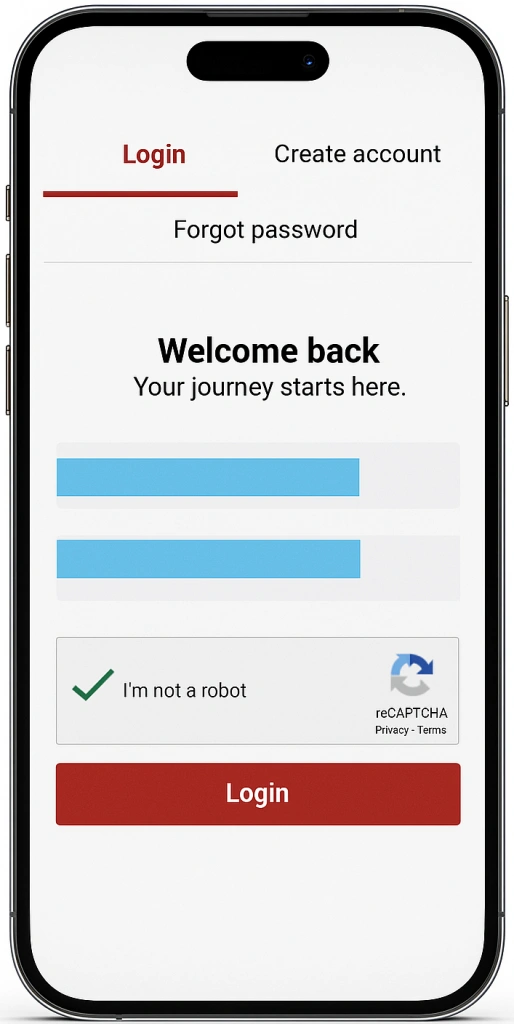
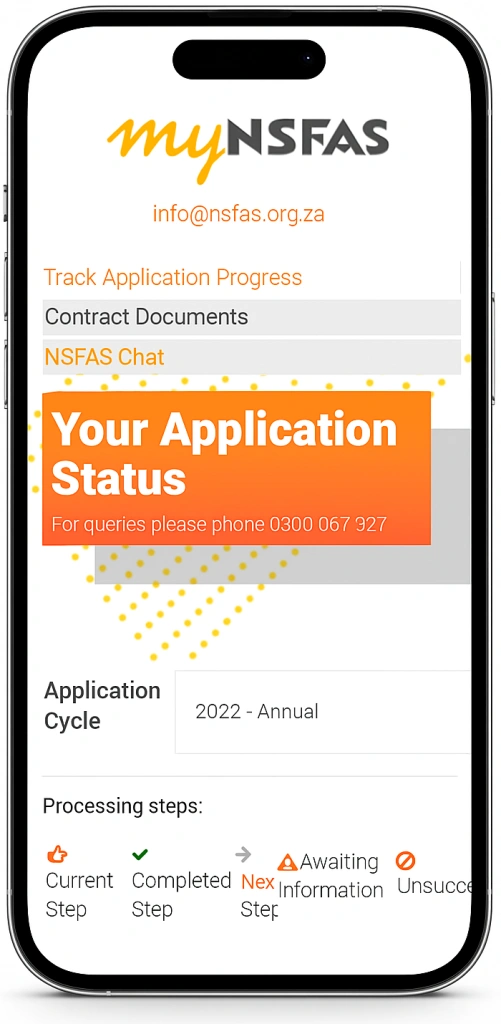
Check Status Using myNSFAS Portal
This portal is the most secure and detailed method to track your application progress.
Steps:
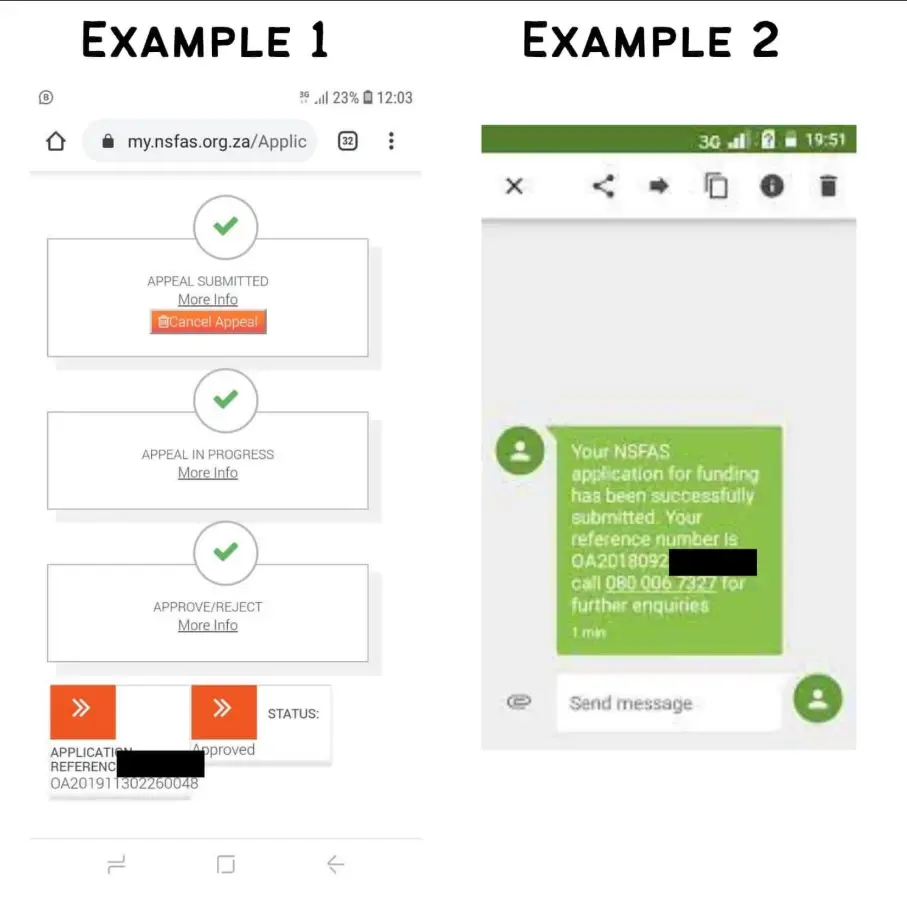
Check Status Using Your Reference Number
If you don’t have portal access or forgot your password, you can still track your application.
Steps:
Go to the myNSFAS portal.
Click Track Funding Progress.
Enter your application reference number.
View your approval, pending, or rejected status.
WhatsApp Status Check
National Student Financial Aid Scheme offers an official WhatsApp line for fast status updates.
Steps:
Save +27 78 519 8006 to your contacts.
Open WhatsApp and send a greeting like “Hi.”
Follow prompts to provide your ID number, application number, and basic details.
Receive your latest application status instantly.
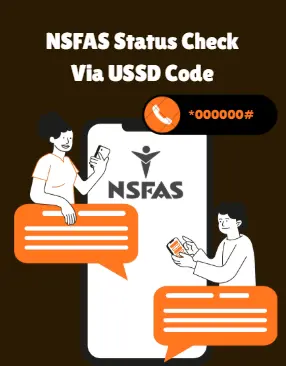
USSD / SMS Status Check
For students with limited internet access,it provides a USSD/SMS method.
Steps:
NSFAS Mobile App
This Mobile app provides a convenient way for students to manage their funding and track application progress from their smartphones.
Features
Check application status
View allowances and wallet balances
Upload supporting documents
Update personal information
Access funding updates anytime
Alternative Options
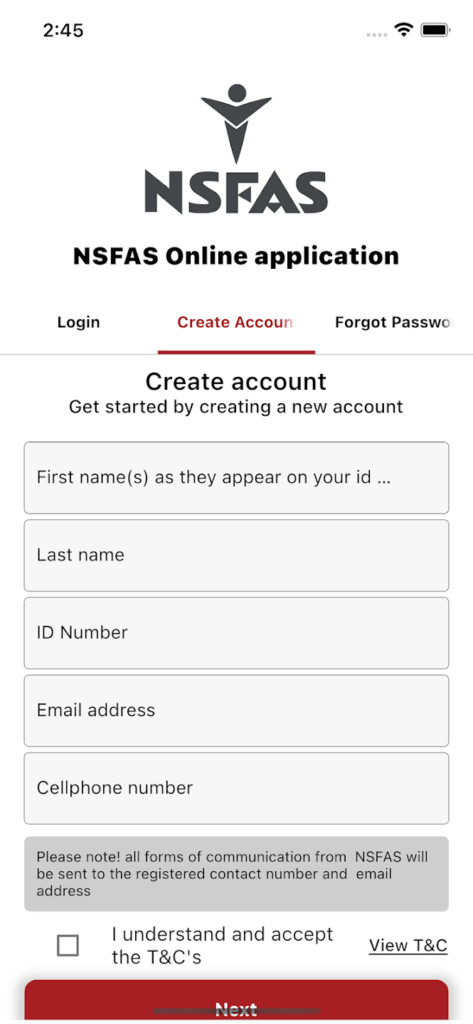
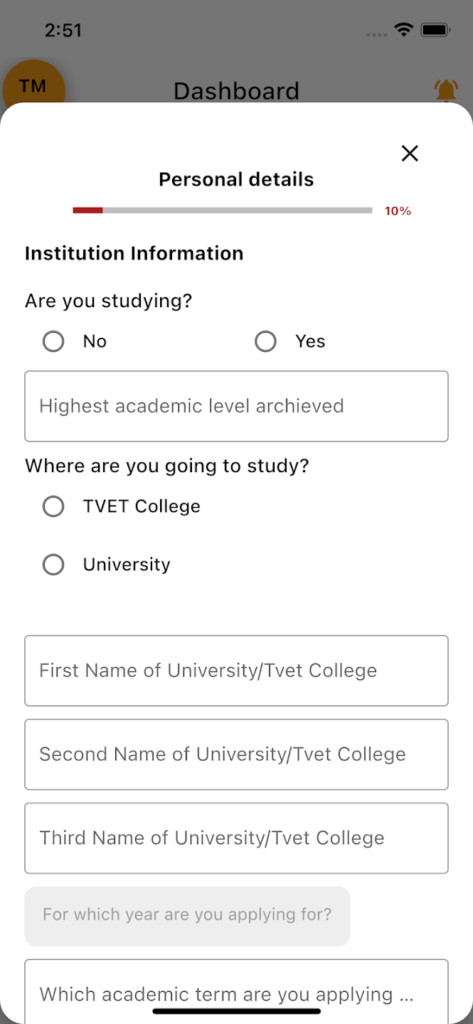
Creating Your myNSFAS Account
Before checking your application status, applying for funding, or updating your information, you’ll need an active my account. The registration process is straightforward and only takes a few minutes to complete.
Registration Process
Visit the official website and select myNSFAS.
Click on Create Account or Register to begin.
Enter your South African ID number and personal information.
Provide a valid email address and active mobile number.
Create a secure password for your account.
Accept the terms and conditions and submit your details.
Verify your account using the OTP sent to your email address or cellphone.
Sign in to your newly created my profile.
Once your account is activated, you can submit applications, upload supporting documents, monitor funding progress, and manage your student funding information from a single dashboard.
NSFAS Login Portal 2026
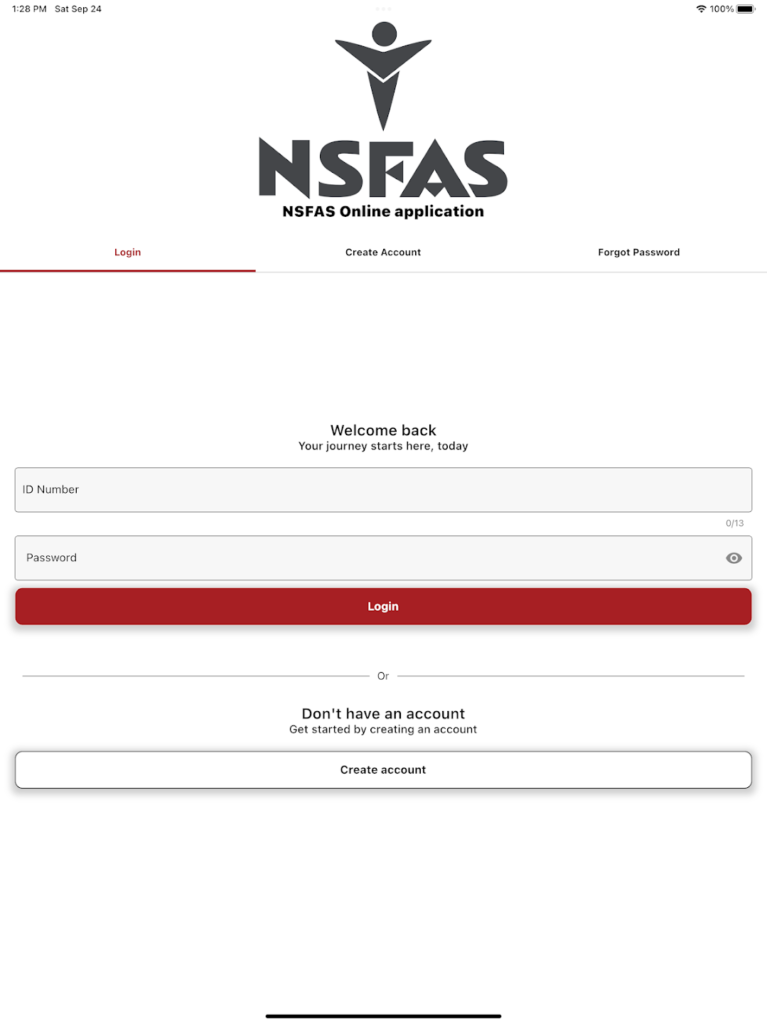
Logging into your account allows you to manage your funding application, track status updates, upload supporting documents, and receive important notifications. The online portal provides quick access to all the tools needed to manage your student funding journey.
How to Log In
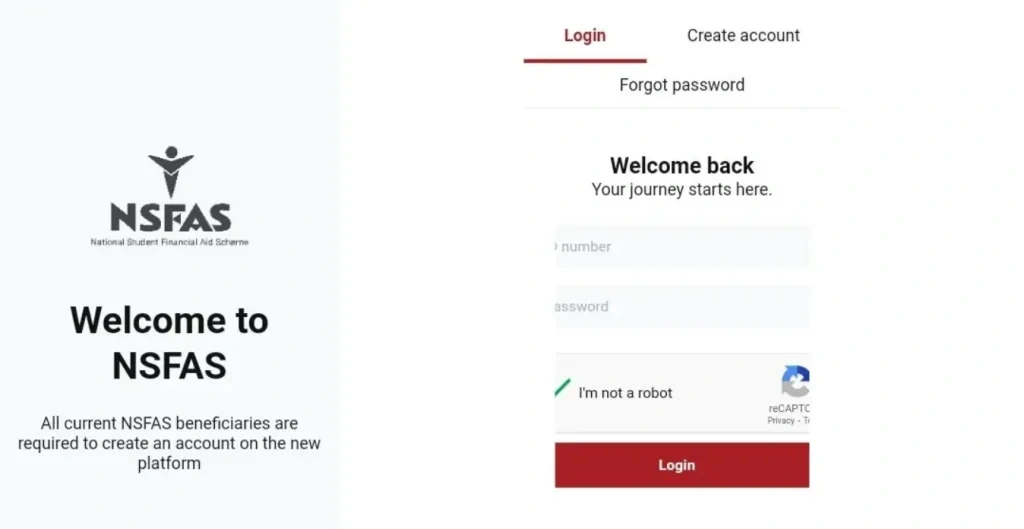
Visit the official National Student Financial Aid Scheme website.
Click on the NSFAS Login option.
Enter your registered ID number or email address.
Type your password.
Complete the security verification if required.
Select Sign In to access your account dashboard.
What You Can Do After Logging In
Regular access to your account helps ensure that important updates, document requests, and funding information are not missed throughout the application process.
NSFAS Status Codes and Actions Required
As your application moves through different verification and approval stages, your status will change accordingly. Understanding these updates can help you track your funding progress, identify any outstanding requirements, and know what to expect next.
| Status | Meaning | Next Step |
| Application Submitted | Your application has been received successfully. | Wait for further processing. |
| Filtering | Initial verification checks are in progress. | No action required. |
| Validation | Your information is being verified. | Wait for confirmation. |
| Evaluation | Supporting documents are under review. | Monitor your account for updates. |
| Funding Eligibility | Financial eligibility checks have been completed. | Await the next stage. |
| Awaiting Academic Results | Academic records are being verified. | No action required. |
| Awaiting Registration | Your institution must confirm registration. | Follow up with your institution if necessary. |
| Provisionally Funded | Initial approval has been granted. | Complete any outstanding requirements. |
| Approved | Funding has been confirmed. | Wait for allowance and payment updates. |
| Rejected | Your application was unsuccessful. | Review the reason and submit an appeal if eligible. |
| Appeal in Progress | Your appeal is being assessed. | Wait for the final outcome. |
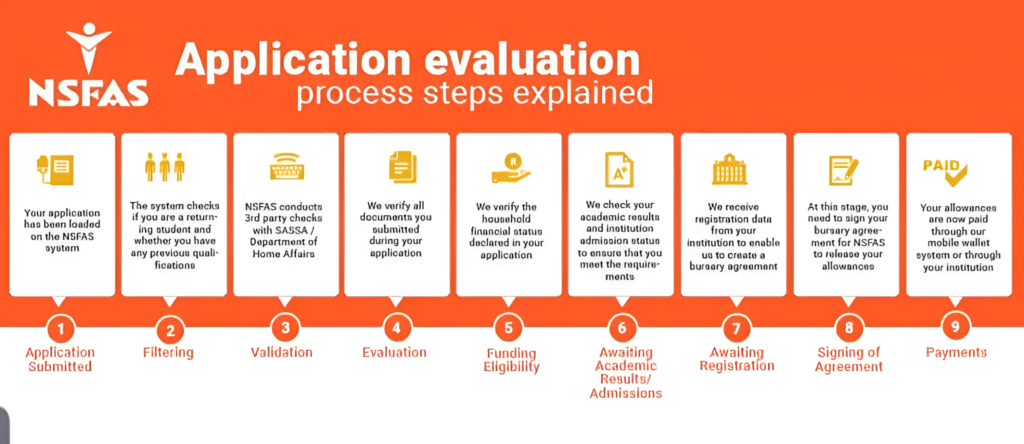
Why Your NSFAS Status Matters
Regularly monitoring your status helps you stay informed about application progress, respond quickly to document requests, and avoid unnecessary delays. If your status changes or additional information is required, taking prompt action can improve the chances of a smooth funding process.
How to Appeal an Unsuccessful NSFAS Application
Receiving an unsuccessful outcome does not always mean the end of your funding journey. If you believe your application was declined due to missing information, incorrect details, or special circumstances, you may be eligible to submit an appeal within the allowed appeal period.
Appeal Process
Sign in to your NSFAS account.
Open the Application Tracker section.
Select the Appeal option if it is available.
Upload supporting documents relevant to your case.
Review your information and submit the appeal request.
Monitor your account regularly for updates and further instructions.
Supporting Documents May Include
Submitting accurate supporting evidence can improve the review process and help National Student Financial Aid Scheme reassess your application based on the latest information provided
What Happens After You Submit Your NSFAS Application?
Submitting your application is only the first step. Before a funding decision is made, your information goes through several verification stages to confirm eligibility and ensure all details are accurate.
Verification Process
Your application may be reviewed and verified by:
Confirms your identity and citizenship status.
(South African Revenue Service) – Verifies household income information.
(South African Social Security Agency) –Checks social grant and beneficiary records where applicable.
Confirms your admission, registration, and academic details.

Why Regular Status Checks Matter
If any discrepancies, missing documents, or verification issues are identified during the review process, your application may require additional information before it can proceed. Monitoring your account regularly helps you respond quickly to requests, avoid unnecessary delays, and ensure your application moves smoothly through each stage of assessment.
NSFAS Requirements and Eligibility 2026
Understanding the eligibility criteria is essential before applying for funding. The following outlines who can apply, what requirements must be met, and who is ineligible.
Eligibility Criteria
Students must meet these conditions to qualify for National Student Financial Aid Scheme funding:
Citizenship:
Financial Threshold:
Academic Requirements:
Institutional Enrollment:
SASSA Recipients:
Academic Progress:
Who Cannot Apply
The following students are not eligible for funding:
Those who already receive full study funding from another organization or sponsor.
Students pursuing a second undergraduate degree after already completing one.
Learners seeking a second certificate qualification after already earning one.
Students enrolled at private colleges or universities.
Applicants studying for non-DHET or non-SAQA-accredited qualifications.
Required Documents for NSFAS 2026 Applications
To ensure your 2026 application is processed smoothly, the following supporting documents must be submitted via the official portal:
South African ID or birth certificate.
Copy of the relevant ID for the means test.
Payslips, tax returns, or affidavits for parents, guardians, or spouses. (Not required if you receive a SASSA grant.)
Utility bill or sworn affidavit confirming your address.
Completed and signed Disability Annexure Form, with any medical reports merged into the submission file.
Uploading these documents through your myNSFAS account ensures your application stays on track and allows NSFAS to verify your eligibility efficiently.
Missing Documents Alert
To avoid delays, regularly check your NSFAS account for document requests and application updates.
Upload any outstanding documents as soon as possible.
Incomplete applications may not be considered for funding.
Monitor your application status for important notifications and decisions.
Keeping your information up to date helps ensure a smoother application process.
How to Reset Your NSFAS Password in 2026
Forgetting your password or not receiving your One-Time PIN (OTP) is a common issue, but recovering access is straightforward through the official portal.
Steps to Reset Your Password
Click “Forgot Password” or “Reset Password”.
Enter your South African ID number and the email address linked to your account.
Choose your recovery method: email link or SMS verification.
Enter the OTP sent to your chosen option to verify your identity.
Create a new strong password and confirm it.
Log in using your ID and the new password.
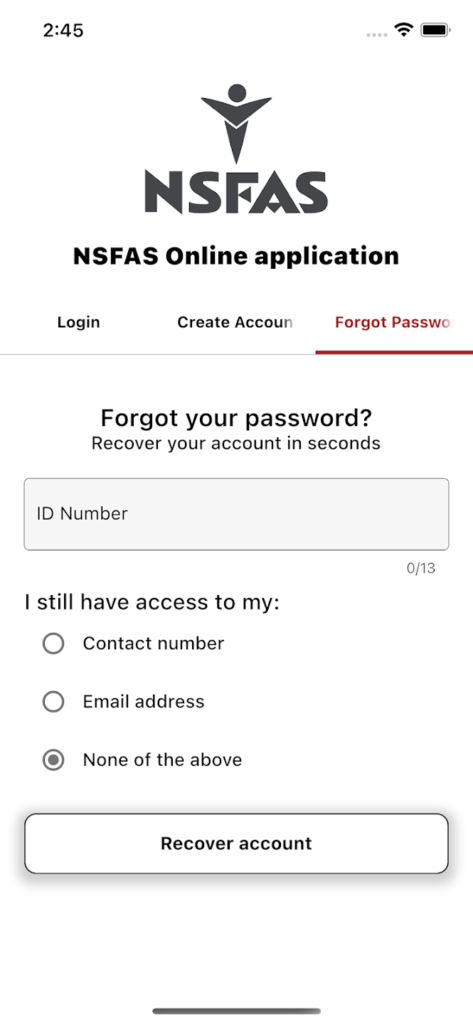
Tips for Successful Password Recovery
Security Best Practices
Following these steps ensures a secure and quick recovery of your NSFAS account without risking delays or falling for scams.
Troubleshooting Common NSFAS Status and Login Issues
Experiencing delays or login problems with your application is common, but most issues can be resolved quickly.
Login & Password Problems
Status Not Updating
WhatsApp & Payment Delays
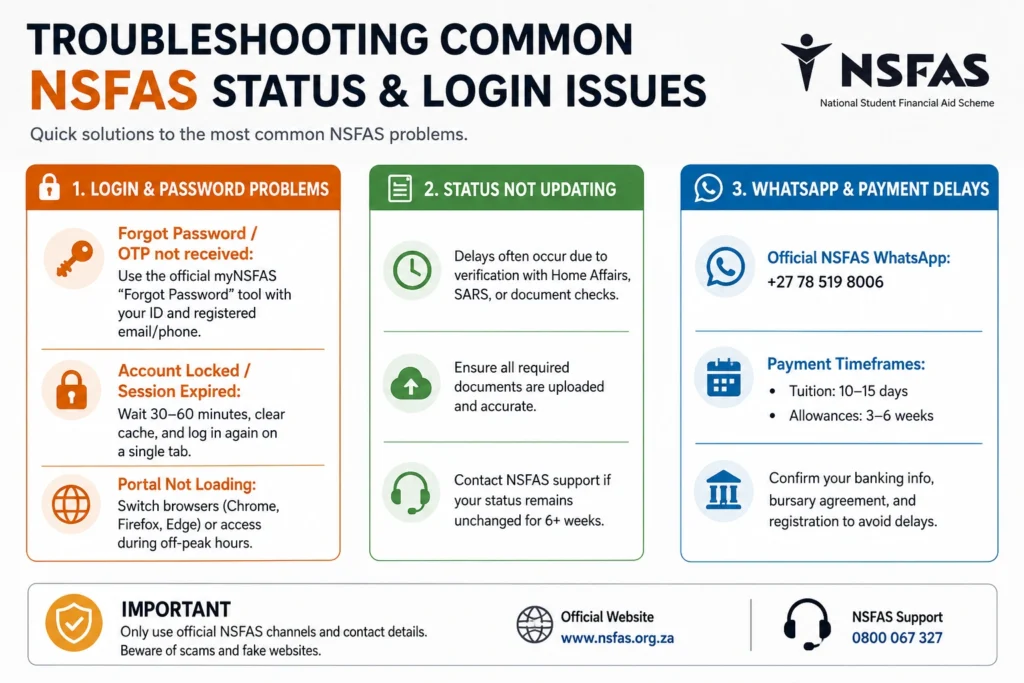
Quick Tips to Avoid Issues
Stay proactive and your NSFAS funding journey will be smooth, timely, and hassle-free.
NSFAS Funding Coverage for Students
NSFAS provides financial assistance to eligible students studying at public universities and TVET colleges. Funding is designed to cover essential academic and living expenses throughout the study period.
What Does NSFAS Cover?
Funding for approved public university programmes.
Financial support for eligible TVET college students.
Assistance with student housing costs.
Support for textbooks, study guides, and academic resources.
Coverage for daily travel expenses where applicable.
Financial support for day-to-day student needs.
Additional funding for students with disabilities.
Assistance for approved support services.
Funding to help cover personal care requirements.
NSFAS funding helps reduce financial barriers to higher education by supporting both academic and essential living expenses, allowing students to focus on their studies and achieve their educational goals.
NSFAS Processing Times: University vs TVET College
The time required to process NSFAS applications can vary depending on the type of institution. Public universities usually receive a large number of applications during a single annual intake, which can result in longer verification and approval periods. TVET colleges, on the other hand, accept applications more frequently throughout the year, allowing applications to be reviewed in smaller batches and often processed more efficiently.
NSFAS Allowances and Student Support
Once funding is approved, It covers a range of academic and living expenses to help students focus on their studies.
University Students
| Allowance Type | Coverage |
| Tuition Fees | Full approved tuition costs |
| Accommodation | Up to approved NSFAS limits |
| Living Allowance | Daily living expenses |
| Learning Materials | Textbooks and study resources |
| Transport Allowance | For eligible students travelling to campus |
| Personal Care Allowance | Personal hygiene and essential needs |
TVET College Students
| Allowance Type | Coverage |
| Tuition Fees | Full approved tuition costs |
| Accommodation | Based on approved accommodation category |
| Living Allowance | Support for day-to-day expenses |
| Learning Materials | Educational materials and resources |
| Transport Allowance | For qualifying commuting students |
| Personal Care Allowance | Personal care and basic necessities |
NSFAS allowances are subject to annual funding guidelines and may vary based on institution type, accommodation arrangements, and student eligibility.
How to Access Your NSFAS Wallet and Check Allowances
Once your NSFAS funding is approved, it’s important to monitor your payments and balances to ensure your allowances are received on time. Students can manage their funds through the NSFAS Wallet:
Log in using your South African ID and PIN.
Open the Transactions section to view your current balance and payment history.
Ensure your registered cellphone number is correct for OTPs and wallet updates.
Access wallet information online via the official NSFAS portal if needed.
Regularly checking your wallet helps you track allowance disbursements and avoid any delays in receiving funds.
NSFAS Payment Schedule 2026 / 2027
NSFAS allowances are distributed according to the approved payment schedule and may vary depending on your institution and funding category.
| Payment Type | University Students | TVET College Students |
| Living Allowance | Paid monthly | Paid monthly |
| Learning Materials | Usually paid once per academic year | Subject to funding guidelines |
| Personal Care Allowance | Where applicable | Paid according to approved allowances |
| Accommodation & Transport | Processed through approved payment channels | Paid according to NSFAS funding arrangements |
NSFAS Application Cycles & Funded Institutions 2026
NSFAS funding follows different cycles depending on the institution. University applications open once a year, typically September–December, while TVET colleges have multiple intakes each year through trimesters and semesters. Always check the official NSFAS website for exact dates.
Institutions Covered
Eligible Courses
These cycles and approved courses ensure students across South Africa can access NSFAS funding efficiently and stay on track with their academic plans.
Best Time to Apply on the myNSFAS Portal 2026
Submit your application as soon as the portal opens to avoid system overload near deadlines.
Do not use family or friends’ information; ensure your email and phone number are correct.
Scan all required documents for smooth submission.
Must still submit an application even if automatically eligible.
Early application increases the chances of timely verification and funding.
Benefits and Limitations of National Student Financial Aid Scheme
Benefits
Limitations
Benefits of Partnering:
National Student Financial Aid Scheme works with accredited accommodation providers to support students with approved housing options across South Africa.
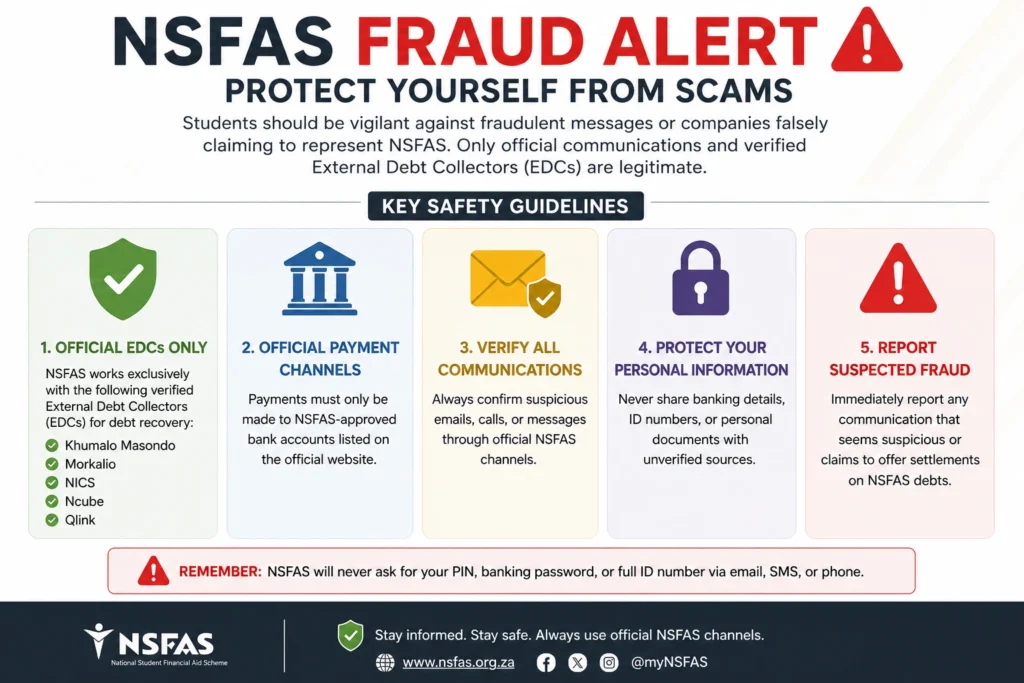
NSFAS Fraud Alert: Protect Yourself from Scams
Students should be vigilant against fraudulent messages or companies falsely claiming to represent National Student Financial Aid Scheme. Only official communications and verified External Debt Collectors (EDCs) are legitimate.
Key Safety Guidelines
Official EDCs Only: NSFAS works exclusively with Khumalo Masondo, Morkalio, NICS, Ncube, and Qlink for debt recovery.
Official Payment Channels: Payments must only be made to approved bank accounts listed on the official website.
Verify All Communications: Always confirm suspicious emails, calls, or messages through official channels.
Protect Your Personal Information: Never share banking details, ID numbers, or personal documents with unverified sources.
Report Suspected Fraud: Immediately report any communication that seems suspicious or claims to offer settlements on NSFAS debts.
Following these precautions ensures your personal and financial information remains secure and helps you avoid falling victim to scams targeting National Student Financial Aid Scheme students.
Stay Safe: Avoid Fake NSFAS Login Pages
Fraudulent websites and phishing scams often imitate NSFAS platforms to steal personal information and login credentials. Always verify that you are using official channels before entering any details.
How to Identify Fake Login Pages
Check the website address carefully before signing in.
Avoid clicking login links received through unsolicited SMS, emails, or WhatsApp messages.
Look for a secure connection (HTTPS) in your browser.
Be cautious of websites with spelling mistakes, poor design, or suspicious requests for personal information.
Never share your password, OTP, or banking details with anyone.
Staying alert and using only official platforms can help protect your account and personal information from online fraud.
Official Contact Channels
If you need assistance with your National Student Financial Aid Scheme application, funding, or allowances, always use the official support channels to avoid scams. You can contact NSFAS via:
Response times vary by channel and peak season, so always allow a few days for email replies during December–February. Using only official NSFAS channels ensures your queries are handled safely and securely.
Video Tutorial:
Frequently Asked Questions
Final Words:
NSFAS plays a vital role in helping South African students access higher education without the burden of financial stress. By checking your application status regularly, keeping your information up to date, and responding quickly to any requests, you can avoid delays and stay on track for funding.
Use only official National Student Financial Aid Scheme channels, monitor your account frequently, and take action whenever updates appear. A few minutes of checking today can help secure your studies tomorrow.